
Media Alert
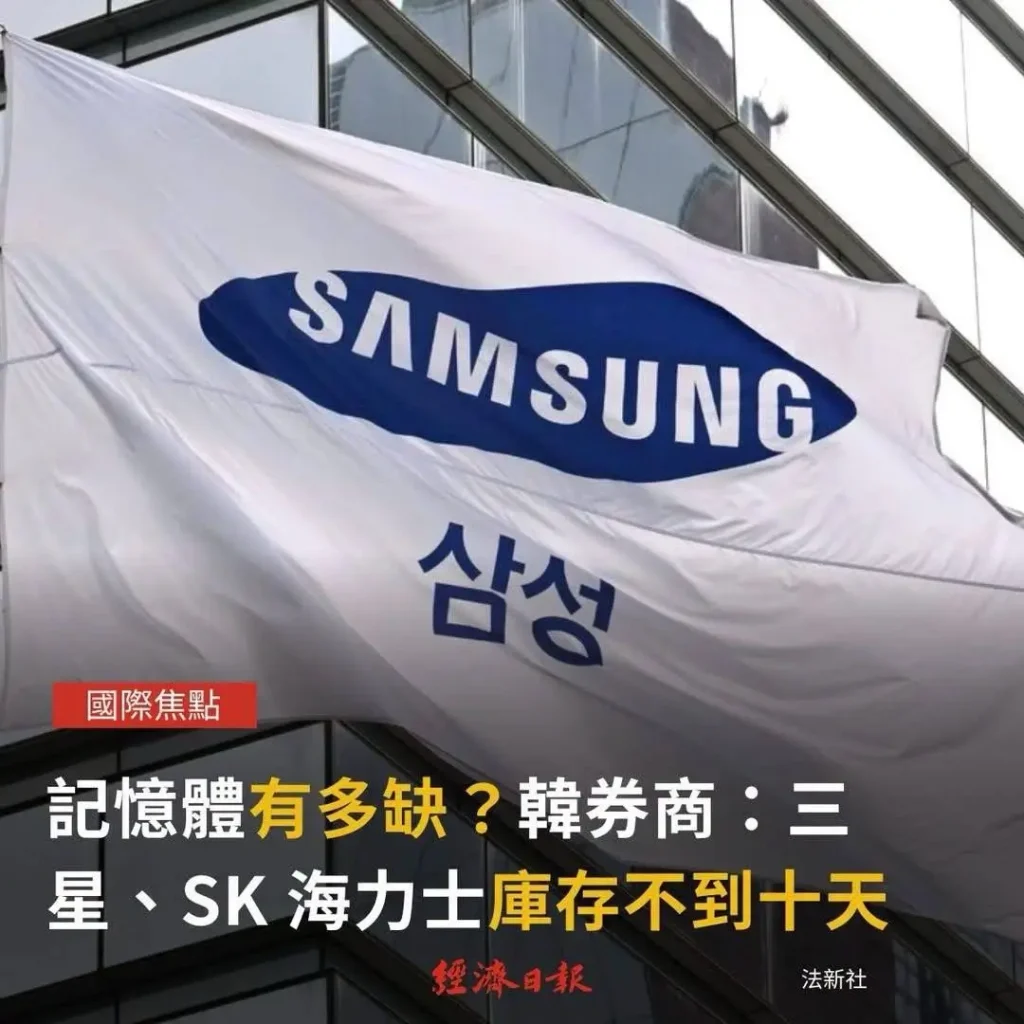
New Taipei City, Taiwan, October 23, 2026 – The RAM crisis is not just affecting Taiwan, but has made it into the evening news over here. Thanks to the AI boom, memory chip inventories at Samsung and SK Hynix are tighter than ever. The matter of fact is: We are not even close to the peak of the memory shortage. Companies and consumers alike need to prepare for higher prices and further challenges.
The development becomes clear when you look at the timeline. For us as a RAM manufacturer, the crisis began as early as the fourth quarter of 2025. In October last year, we saw DRAM prices rise sharply for the first time. I remember that because the price jumps at the time were already extreme.
Some of our partners recognized the looming shortages early on. Despite rising prices, we were receiving larger orders. Many hardware retailers began stocking up on RAM. As a result, the fourth quarter of 2025 was strong in terms of sales, our inventories were depleted. And at the same time, new DRAM became increasingly expensive. We therefore had to raise our prices.
Even as a long-standing RAM manufacturer, this situation was unusual. On the stock markets, shares of major memory manufacturers posted record gains. In December 2025,Micron Technology officially announced that it would withdraw completely from the consumer market for RAM and SSDs.
However, while the major memory manufacturers are benefiting from the situation, medium-sized companies are increasingly facing problems. For example, some of our partners have abandoned PC assembly as a business segment. High RAM prices are making cost calculations difficult. For many providers, the business was no longer profitable.

In 2026, the industry started talking about a memory crisis
At the beginning of this year, analysts and the media began talking about the memory crisis. DRAM prices continued to rise. Our inventories were empty, new production was expensive, and demand collapsed. We even canceled our Computex booth because under these circumstances, it did not make sense to find new resellers..
We switched to crisis communications, and supply delays occurred. We were able to largely maintain production in order to supply our existing partners. Nevertheless, sales declined sharply. At the same time, we began receiving new inquiries from potential distributors looking to enter the RAM market. The currently high prices probably look attractive at first glance.
However, in the second and third quarters of this year, we saw somewhat stronger demand again. Companies and consumers are buying more cautiously, but they are buying RAM again. I remember a conversation with a journalist this summer. At one point, he said: “People have accepted that RAM has become more expensive and is not going to get cheaper again.”
Nevertheless, the truth is that high RAM prices also lead to lower demand and tougher competition. Actual margins are therefore smaller than the current prices might suggest. Entering the market as a distributor is also difficult.
As a RAM manufacturer, we are seeing a new level of escalation
Unfortunately, things are not getting back to normal. Instead, as a RAM manufacturer, we believe we are only at the beginning of the crisis. We have learned a lot as a manufacturer during this crisis, but the market is brutal. It has never been this difficult to secure DRAM. In some cases, we have not received any offers for the chips we need for weeks. At the same time, supply security is becoming increasingly difficult.
This is no longer about reaching another all-time high in prices. It is no longer just about overpriced DRAM or other expensive components. Instead, there are simply no reliable supply options available.
The crisis has now become so far-reaching that it is also slowing down the development of new consumer hardware. NVIDIA, for example, has long been the subject of criticism within the gaming community. Many PC gamers feel neglected. That is the uncomfortable truth: The RAM crisis is far from over. It may have only just begun.